
November at SMNWR

Last week at St. Marks NWR, I walked down a narrow beach on a falling tide. A half-moon shining in a clear night sky cast my shadow on fiddler crabs as they scurried out of my way. At first light I turned back toward the Lighthouse, searching for migrant warblers in the Red Cedars and Wolfberry thickets and noticed the tracks of a bobcat that had been following me.
In the last week, I’ve had a number of warblers at the refuge, Magnolia, Black-throated Green, Tennessee, Palm, Yellow and Yellow-rumped. These later warbler migrants are mostly birds of the Canadian boreal forest and most of these trans-migrants have now passed through. The Fall warbler hunting season is drawing to a close.
It’s November at St. Marks. This month marks the middle of Fall. The Fall wildflower peak is past, but through the first half of the month, the remaining goldenrod, sneezeweed, mistflower and shepherd’s needle will attract the diminishing number of monarchs and fritillaries. Clumps of pink muhly grass will slowly fade as bushy broomsedge sends it white fluffy seeds off into the wind. Cypress needles will shift from green to umber, Winged Sumac will turn scarlet and strings of yellow grape leaves will drape from the trees as the refuge begins to shift toward winter.
There will still be some migrant stragglers through the first half of the month, a few late birds still headed for South America. Increasingly, though, the birding story at St. Marks will be the arrival of Winter residents. By the end of the month, the refuge will host most of its winter species, including Hermit Thrush, American Goldfinch, Cedar Waxwing and Robin. Mixed feeding flocks moving through the canopy at the Double Bridges and along Tower Pond Trail will include resident birds like chickadees, titmice and Downy Woodpecker, but watch them closely for newly-arrived Blue-headed Vireos and Hermit Thrush.
Ducks at St. Marks are running late, which they do in some years. I had only 106 ducks of four species on my late October survey, but November sees a rapid influx of waterfowl and by Thanksgiving we should have a thousand ducks of a dozen species, including Black Duck and both mergansers. Snow Geese sightings are most common in November and it is also the month to watch for Ross’ and Greater White-fronted Geese.
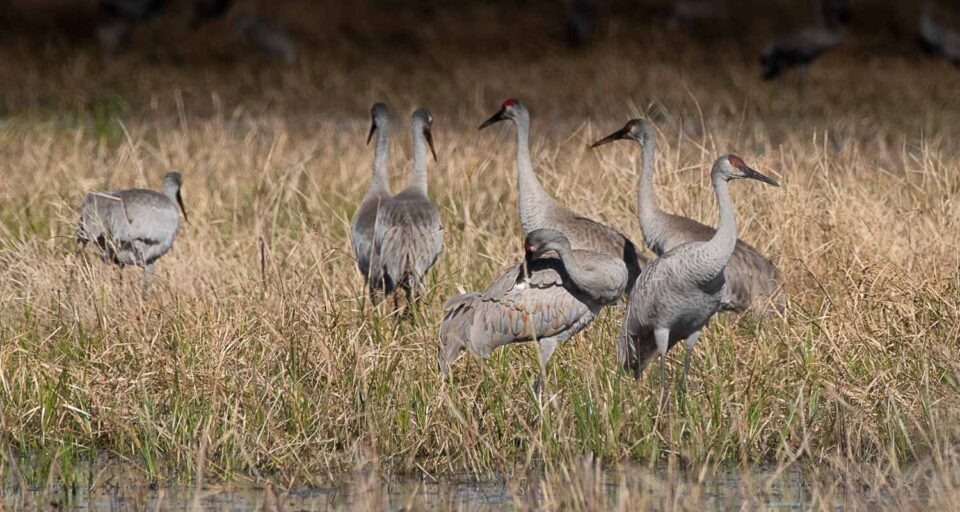
Listen in mid-month for the bugling call of high-flying Sandhill Cranes as they head for their peninsular wintering grounds. Common Loons and Horned Grebes will arrive and it’s time to start looking for Rusty Blackbirds near the Double Bridges. This is also the month that winter-nesting Great Horned Owls begin duetting. Their low, sonorous hoots can be heard at dawn and dusk.
The weather is catching up with the season as cold fronts begin to arrive. There will still be some warm Fall days, but we have survived another Gulf Coast Summer. Grab your binoculars and come down to the refuge. It’s time for some serious birding at St. Marks.