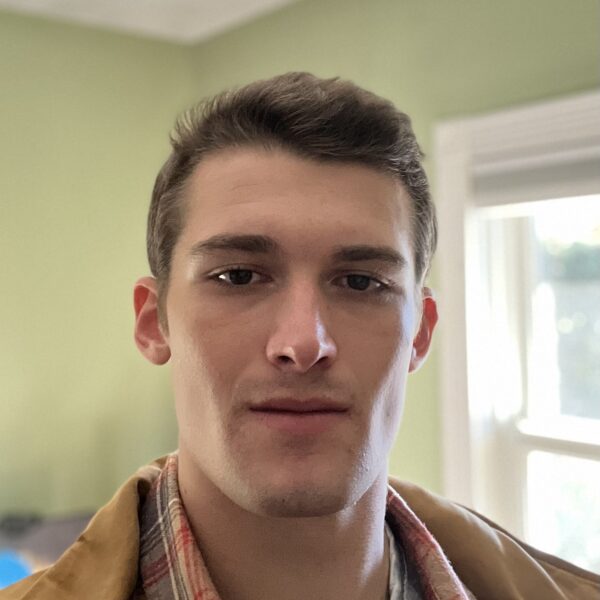
Ryan Wagner
Intern
Hi everyone! My name is Ryan Wagner, and I am extremely grateful for this opportunity to work as an intern at the St. Marks National Wildlife Refuge for the Winter/Spring 2024 season. I grew up on the southeast end of Long Island, where I was a short drive from the barrier island beaches, bays, inlets, and salt marshes that characterize the natural beauty of Long Island’s dynamic history and present. Growing up, I spent my free time playing sports and exploring Long Island’s diverse ecosystems at places like the Quogue Wildlife Refuge. From a very young age, I knew that I wanted to pursue a career involving the science and conservation of natural systems. I was immediately drawn to apply for the intern position because it offered an array of widely applicable field skills to pursue a career working in ecology, conservation, and management research. The variety of conservation and management-based fieldwork with different wildlife populations described in the position was a perfect fit for my interests.
My interests led me to pursue an Environmental Studies degree at Gettysburg College, where I also played on the Football team for two years. My Environmental Studies coursework concentrated on Marine and Freshwater Ecology, Wildlife and Conservation Science, and Earth Systems Science. My education at Gettysburg College afforded me opportunities to conduct population surveys of wildlife in the Gettysburg National Military Park using camera trapping techniques, painted turtles (Chrysemys picta) in Gettysburg College’s Quarry Pond using mark-recapture techniques, and Atlantic mole crab (Emerita talpoida) at Assateague State Park using transects perpendicular to the shoreline. I also made use of telemetry foraging data of sperm whales (Physeter macrocephalus) and Brown Pelicans (Pelecanus occidentalis) alongside chlorophyll-a data to identify an ecologically and economically effective MPA for the Gulf of Mexico.
I also had the opportunity to publish remote sensing research in Gettysburg College’s Cupola. The focus was to assess how a new inlet along Long Island’s barrier island created by Hurricane Sandy in 2012, impacted summer algae concentrations in three adjacent bays. Harmful algae blooms (HABs) have impacted Long Island’s coastal waters due to eutrophication for decades, however, the findings demonstrate a significant decrease in algae concentration proximal to the new inlet. This research was particularly special to me because it focused on the area where I grew up and provided my foundation in natural science knowledge. I am ecstatic about the opportunity to live in and work on the coastal wetland and forest ecosystems of the Florida panhandle because I enjoy working in different types of ecosystems. I hope to make use of the skills, experience, and connections gained from my time working with St. Marks Wildlife Refuge and the Fish & Wildlife Service to take the next steps in my career path.